
Building Skills Through Purposeful Discovery
Montessori learning helps children move from exploration to understanding through hands-on experiences that foster concentration, independence, confidence, and a lifelong love of learning.
Activities such as pouring, food preparation, dressing, and caring for the environment help children develop coordination, focus, responsibility, and independence.
Specialized materials refine the senses and help children understand patterns, relationships, and the world around them.
Through conversation, storytelling, tactile materials, and early reading experiences, children build strong communication and literacy foundations.
Concrete Montessori materials introduce quantity, sequencing, number relationships, and problem-solving in meaningful, hands-on ways.
Cultural studies in the Montessori classroom starts from the beginning and is never ending in its possibilities. Cultural studies is made up of various elements such as history, geography, botany, zoology and science. Here, children learn about all different kinds of life on earth. Subjects include the solar system, maps, flags, land formations, timelines, lifecycles, parts of a tree/flower/leaf, specific cultures and their ways of life, etc.
The goal of culture is for the children to gain a better understanding and acceptance of others and themselves, and to understand diversity in humans as well as the wonders of the natural world. As such, they are able to develop their own unique personalities and interests, and become keen observers of the world around them. Some cultural subjects: History, geography, botany, zoology and science.
Maria Montessori believed that children were the way to world peace, and that it is the job of education to give children the tools they need to be the independent, loving and understanding and strong leaders of tomorrow impacting the world positively.
The child who has felt a strong love for his surroundings and for all living creatures, who has discovered a joy and enthusiasm in work, gives us reason to hope that humanity can develop in a new direction.
— Maria Montessori
Supporting the Whole Child
Montessori education nurtures intellectual, social, emotional, and physical development through purposeful work, respectful relationships, and meaningful real-world experiences.
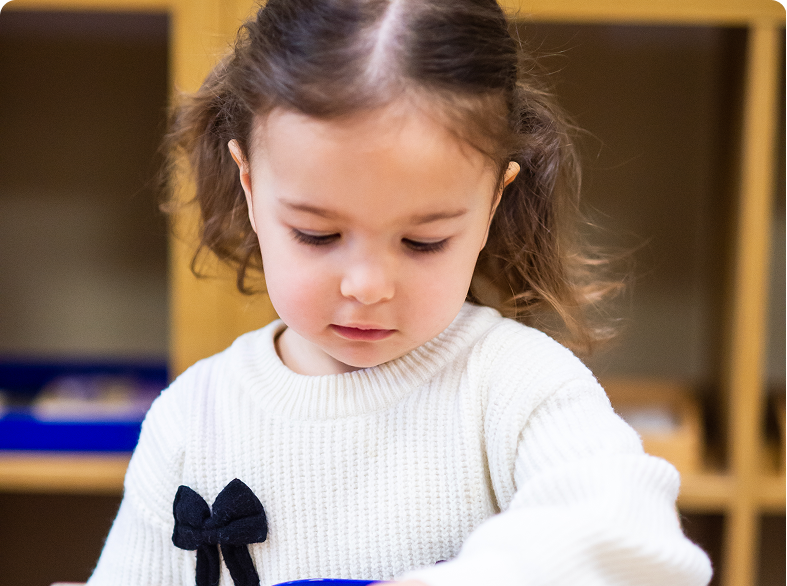
Exploring the Wider World
Geography, science, nature studies, music, and cultural exploration help children develop curiosity, wonder, and global awareness.
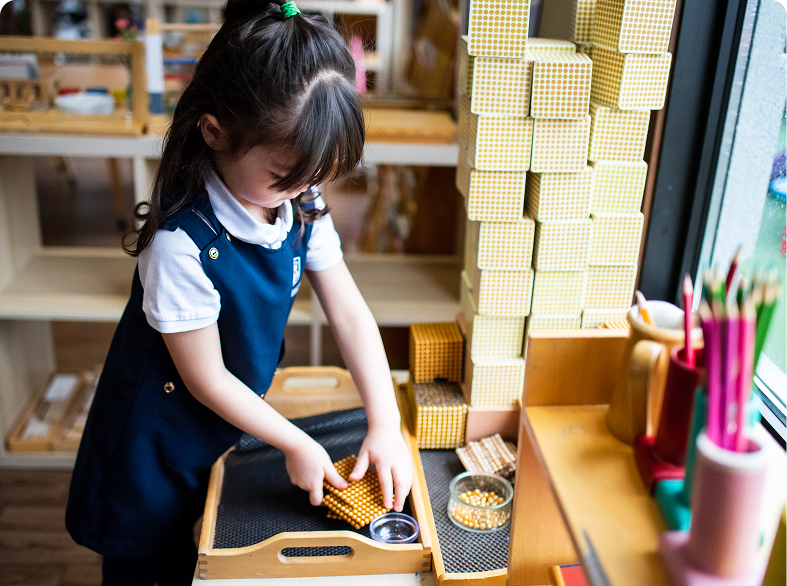
A Classroom Designed for Growth
Carefully prepared environments encourage focus, independence, self-discipline, and joyful engagement in learning.
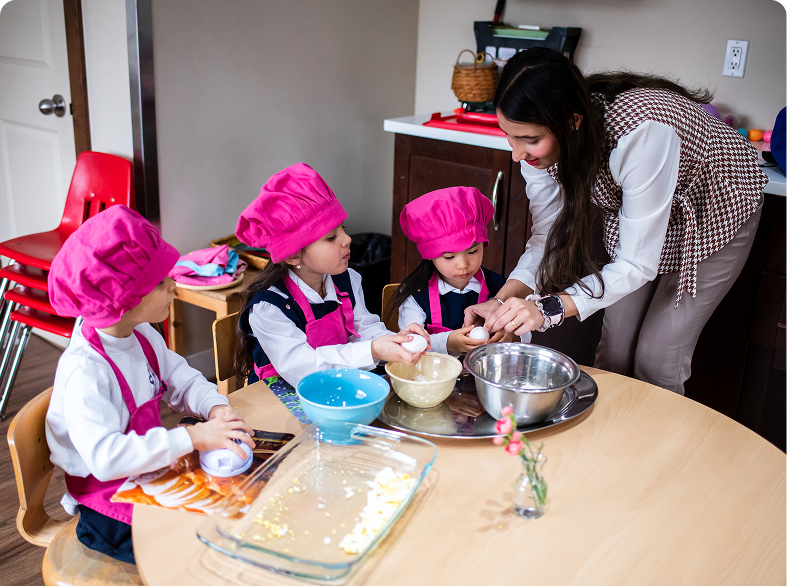
Guidance That Fosters Confidence
Certified Montessori educators observe each child closely, introducing new challenges and opportunities at the right time to support continued growth.